What Is A2 Cow Bilona Ghee? A Complete Beginner's Guide
If you’ve recently started exploring healthier, more traditional food choices, chances are you’ve come across the term A2 Cow Bilona Ghee. It’s often praised as one of the purest and most nutritious forms of ghee available today. But what exactly makes it different from the regular ghee sitting on most supermarket shelves? In this beginner’s guide, we’ll break down everything you need to know about A2 Cow Bilona Ghee — what it is, how it’s made, and why it deserves a place in your kitchen.
Understanding A2 Milk First
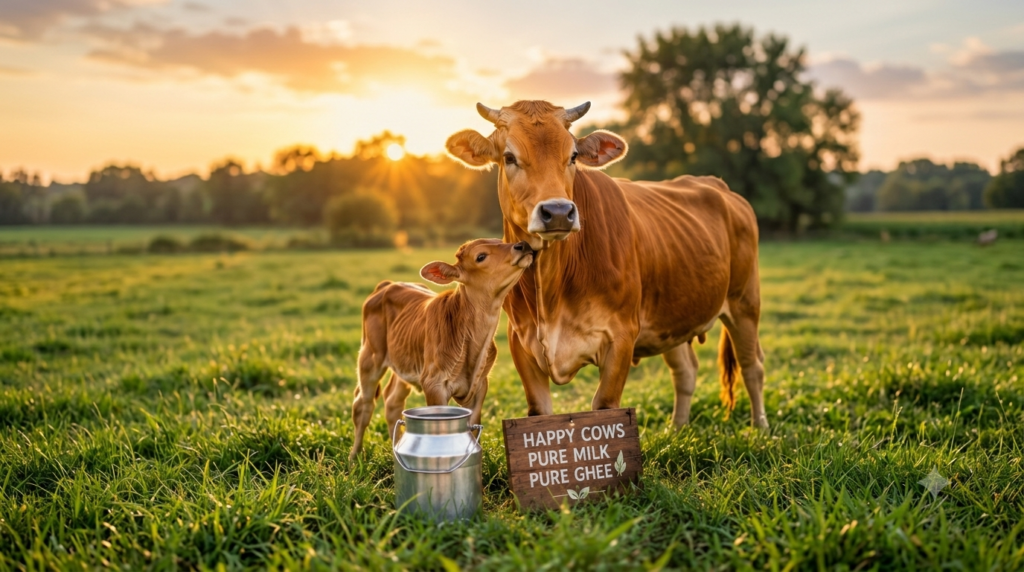
To understand A2 ghee, you first need to understand A2 milk. Cow milk contains a protein called beta-casein, which exists in two main types: A1 and A2. Most Western and hybrid cow breeds, especially those bred for higher milk yield, produce A1 protein. However, indigenous Indian cow breeds — such as Gir, Sahiwal, and Red Sindhi — naturally produce A2 beta-casein protein, which is considered easier to digest and closer to the milk our ancestors consumed for centuries.
Did You Know? Indigenous Indian cow breeds like the Gir have been around for thousands of years and are even mentioned in ancient texts. Some historians believe Gir cows were among the earliest domesticated cattle breeds, later exported to countries like Brazil, where they’re still prized for milk quality today.
A2 milk is the foundation of A2 ghee. Without starting with pure A2 milk from desi cow breeds, you simply cannot get authentic A2 ghee, no matter how it’s processed later.
What Does "Bilona" Mean?
The word Bilona refers to a traditional, time-tested method of churning ghee that has been practiced in Indian households for generations, long before electricity or machines existed. The word itself comes from the wooden hand-churner used in the process — a tool that has barely changed in centuries.
Here’s how the traditional Bilona method typically works:
- Curdling the milk – A2 cow milk is first boiled and then set into curd (dahi) using a natural culture.
- Hand-churning – The curd is churned using a wooden churner (called a “bilona” or “madhani”) to separate the butter from the buttermilk.
- Simmering the butter – The extracted white butter is then slow-cooked on low flame, allowing the moisture to evaporate naturally.
- Straining the ghee – What remains is golden, aromatic, granular ghee, free from any additives or shortcuts.
Fun Fact: Making just 1 kg of authentic Bilona ghee can take anywhere between 20–22 litres of milk and several hours of manual churning — which is exactly why it’s considered a labour of love rather than mass production.
Bilona Ghee vs. Regular Ghee — A Quick Comparison
Milk Source | Indigenous A2 cows (Gir, Sahiwal) | Often mixed/A1 cattle |
Process | Curd churned by hand, slow-cooked | Direct cream separation via machines |
Time Taken | Several hours, traditional method | Minutes, industrial process |
Additives | None | May include stabilizers in mass production |
Aroma & Texture | Rich, nutty, grainy | Often smoother, milder aroma |
Why Is A2 Bilona Ghee Considered Superior?
Many nutrition-conscious consumers are shifting toward A2 Bilona Ghee for several key reasons:
- Easier Digestion – A2 protein is often considered gentler on the digestive system compared to A1 protein.
- Rich Nutritional Profile – Traditional Bilona ghee retains higher amounts of fat-soluble vitamins like A, D, E, and K, along with beneficial short-chain fatty acids such as butyric acid.
- No Additives or Preservatives – Since it’s made using curd-based churning rather than direct cream extraction, there’s no need for any artificial preservatives.
- Authentic Aroma and Taste – The slow-cooking process enhances the natural nutty aroma and grainy texture that pure ghee lovers look for.
- Supports Gut Health – Butyric acid, a short-chain fatty acid found in Bilona ghee, is known to support gut lining health and digestion.
Think of it this way: if regular ghee is like instant coffee, A2 Bilona ghee is the slow-brewed filter coffee — same basic ingredient, but a world apart in depth, aroma, and character.
How Is It Different From Regular Ghee?
Most commercial ghee available in the market is made directly from cream (malai) using centrifugal separators, which speeds up production but often compromises on nutritional quality and authenticity. Regular ghee may also come from A1 milk, without any distinction made during production.
A2 Bilona Ghee, on the other hand, follows a curd-based, slow-churned process using milk sourced specifically from indigenous cow breeds — making it a more traditional, wholesome, and premium choice.
Who Should Include A2 Bilona Ghee in Their Diet?
A2 Bilona Ghee can be a great addition for:
- Individuals looking for easily digestible, natural fats
- Families wanting to return to traditional, chemical-free food choices
- People following Ayurvedic or wellness-focused diets
- Anyone who values authentic taste and superior quality over mass-produced alternatives
As always, if you have specific health conditions or dietary concerns, it’s a good idea to consult a healthcare professional before making significant dietary changes.
Quick FAQs
Yes — most people notice a richer, nuttier aroma and a slightly grainy texture, thanks to the slow Bilona process.
Generally, yes, because of the time, milk quantity, and manual effort involved in traditional production.
Yes, ghee has a high smoke point, making it suitable for frying, roasting, and everyday Indian cooking.
Final Thoughts
A2 Cow Bilona Ghee isn’t just a food product — it’s a return to tradition, purity, and mindful eating. Made from the milk of indigenous cow breeds and prepared using an age-old churning process, it offers a level of authenticity and nutrition that’s hard to find in mass-produced alternatives.
At Nandini Dairy Farm, we take pride in preserving this traditional Bilona method, sourcing milk directly from indigenous cows and slow-churning every batch of ghee with care. If you’re looking to experience the true taste and goodness of authentic A2 ghee, this timeless method is where it all begins.
Looking to bring home authentic A2 Cow Bilona Ghee? Explore Nandini Dairy Farm’s traditionally crafted ghee, made using the authentic Bilona method. Visit our Shop page to order online, or head to our Contact Us page if you have any questions—we’re always happy to help.