A2 Ghee vs Regular Ghee: Which One Is Better?
Walk into any grocery store today and you’ll find dozens of ghee brands lined up on the shelf — each claiming to be the “purest” or “most traditional.” But among all these options, one comparison keeps coming up again and again: A2 desi ghee vs regular ghee. Are they really different, or is it just clever marketing? Let’s break it down in detail.
What Is Desi Ghee, and How Does A2 Ghee Fit In?
Desi ghee is the Indian term for ghee made the traditional way — using time-tested methods passed down through generations, rather than modern shortcuts. It’s the kind of ghee our grandmothers made at home: rich, aromatic, and full of character.
A2 ghee takes this a step further by specifying which milk goes into that traditional process. It’s made from the milk of indigenous cow breeds — such as Gir, Sahiwal, Red Sindhi, and Rathi — that naturally produce A2 beta-casein protein. This protein type is believed to be gentler on digestion compared to the A1 protein found in most hybrid or foreign cattle breeds used for commercial dairy farming, such as Holstein Friesian or Jersey cows.
Regular commercial ghee, on the other hand, is usually made from mixed-breed cow or buffalo milk, without any distinction made between A1 and A2 protein types, and rarely follows the slow, traditional desi ghee-making process at all.
Did You Know? India is home to over 40 recognized indigenous cattle breeds, but many of them have seen declining numbers due to the rise of high-yield hybrid cows bred primarily for volume rather than milk quality. True desi ghee, made from A2 milk, is now playing a small but meaningful role in reviving interest in these native breeds and supporting the farmers who preserve them.
Why Desi Ghee Has Always Been More Than Just Food
Long before “superfoods” became a marketing term, desi ghee held a place of honor in Indian households and Ayurvedic tradition. Ancient Ayurvedic texts refer to ghee as “Ghrita” and describe it as a substance that enhances digestion (Agni), nourishes tissues, and even supports memory and mental clarity when consumed in the right quantity. For centuries, desi ghee wasn’t just cooking fat — it was considered medicine, offered in rituals, given to new mothers, and passed down as a symbol of nourishment and prosperity.
This is part of why the debate between A2 desi ghee and regular ghee feels important to so many people today. It isn’t just about taste or price; it connects to a much older understanding of food as something that should nourish the body, not just fill it.
How Traditional Desi Ghee Is Actually Made
The difference between authentic desi ghee and regular commercial ghee isn’t just about the cow — it’s also about how the ghee is made.
- Traditional Desi Ghee (Bilona Method) is made by curdling milk into curd, hand-churning it using a wooden churner (called a “bilona”) to separate butter from buttermilk, and then slow-cooking that butter on a low flame until the moisture evaporates naturally. This method has been used in Indian households for generations, long before machines existed.
- Regular/Commercial Ghee is typically made using centrifugal machines that separate cream directly from milk, skipping the curdling and hand-churning steps entirely. This process is faster and more cost-effective, which is why most large-scale dairy brands use it — but it rarely qualifies as true desi ghee in the traditional sense.
Quick Fact: Producing 1 kg of authentic desi ghee using the Bilona method can take up to 20–22 litres of milk and several hours of manual effort — compared to the faster, machine-driven process used for most regular ghee.
Desi Ghee vs Regular Ghee: Side-by-Side Comparison
Factor | A2 Desi Ghee | Regular Ghee |
Milk Source | Indigenous A2 cow breeds (Gir, Sahiwal, etc.) | Mixed-breed cows/buffalo |
Protein Type | A2 beta-casein | Often a mix of A1 and A2 beta-casein |
Production Method | Traditional Bilona (hand-churned) | Machine/centrifugal separation |
Time & Effort | High – slow and manual | Low – fast and automated |
Aroma & Texture | Rich, nutty, grainy | Milder, smoother |
Additives | None, naturally preserved | May include stabilizers in some mass-market brands |
Cultural Roots | Deep-rooted in Indian households | Modern, industrial origin |
Price | Generally higher | Generally lower |
Health Benefits of Choosing Authentic Desi Ghee
Many nutrition-conscious consumers are shifting toward A2 Bilona Ghee for several key reasons:
- Easier Digestion – A2 protein is often considered gentler on the digestive system compared to A1 protein.
- Rich Nutritional Profile – Traditional Bilona ghee retains higher amounts of fat-soluble vitamins like A, D, E, and K, along with beneficial short-chain fatty acids such as butyric acid.
- No Additives or Preservatives – Since it’s made using curd-based churning rather than direct cream extraction, there’s no need for any artificial preservatives.
- Authentic Aroma and Taste – The slow-cooking process enhances the natural nutty aroma and grainy texture that pure ghee lovers look for.
- Supports Gut Health – Butyric acid, a short-chain fatty acid found in Bilona ghee, is known to support gut lining health and digestion.
Think of it this way: if regular ghee is like instant coffee, A2 Bilona ghee is the slow-brewed filter coffee — same basic ingredient, but a world apart in depth, aroma, and character.
It’s worth noting that scientific research comparing A1 and A2 milk proteins is still evolving, and individual tolerance can vary from person to person. If you have specific health concerns or existing conditions, it’s always wise to consult a healthcare professional before making significant dietary changes.
Taste and Culinary Experience: Why Desi Ghee Stands Out
Beyond health, many people simply prefer authentic desi ghee for its taste and aroma. The slow-churned Bilona process gives it a distinct nutty, caramelized flavor and a slightly grainy texture — something ghee purists often say is missing from mass-produced alternatives that tend to have a smoother, more neutral taste.
This difference becomes especially noticeable in simple preparations — a spoonful of desi ghee on hot rice, dal, or roti, where the ghee itself is the star rather than a background ingredient.
Common Myths Around Desi Ghee and Regular Ghee
Myth 1: All ghee labeled “desi” is genuinely made using traditional methods. Not necessarily. The term “desi ghee” is sometimes used loosely for marketing, even on ghee made using modern machine-based processes. It’s important to buy from brands that are transparent about their sourcing and production methods.
Myth 2: Regular ghee has no nutritional value. This isn’t true either — regular ghee still provides healthy fats and energy. The difference lies more in the protein type and traditional production process rather than regular ghee being “bad.”
Myth 3: Desi ghee is only a health trend with no real basis. While marketing has certainly amplified the term in recent years, the underlying difference in beta-casein protein types and traditional churning methods is a real, recognized distinction — not just a passing trend.
So, Which One Should You Choose?
If you’re looking for:
- Convenience and a lower price point → Regular ghee may suit everyday, casual use.
- Traditional taste, native cow sourcing, and authentic desi ghee-making methods → A2 desi ghee, made using the Bilona process, is likely the better choice.
- A more digestion-friendly option, especially if you’re sensitive to regular dairy → Authentic A2 desi ghee may be worth trying.
Ultimately, the “better” option depends on what you value more — cost and convenience, or the authenticity, tradition, and natural process that true desi ghee represents.
Final Thoughts
Both A2 desi ghee and regular ghee have their place in Indian kitchens, but they cater to different priorities. Authentic desi ghee, especially when made using the traditional Bilona method, offers a genuine connection to how ghee was made for centuries — right down to the breed of cow and the slow, careful process behind every jar.
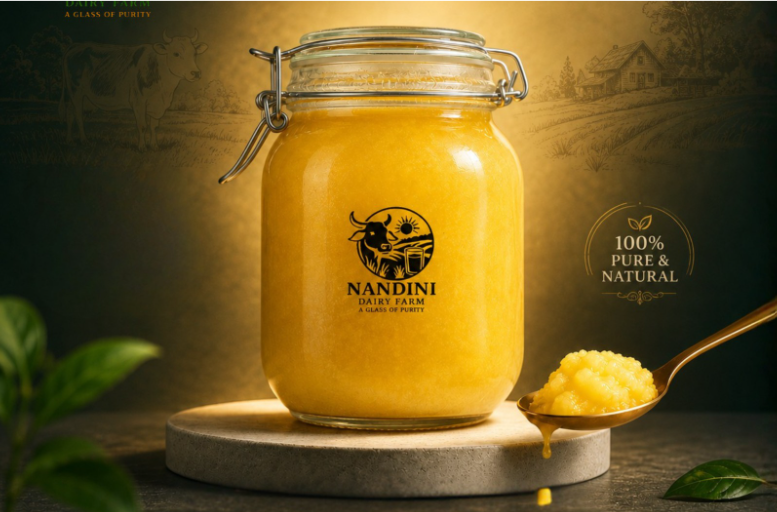
At Nandini Dairy Farm, we specialize in authentic A2 Cow Desi Bilona Ghee, made using indigenous cow milk and traditional hand-churning methods — bringing you a product that stays true to how desi ghee was always meant to be made, one small batch at a time.
Ready to bring home the purity of authentic Bilona Ghee? Browse our Shop page to explore Nandini Dairy Farm’s A2 Desi Bilona Ghee, or visit our Contact Us page for product enquiries, bulk orders, or personalised assistance.